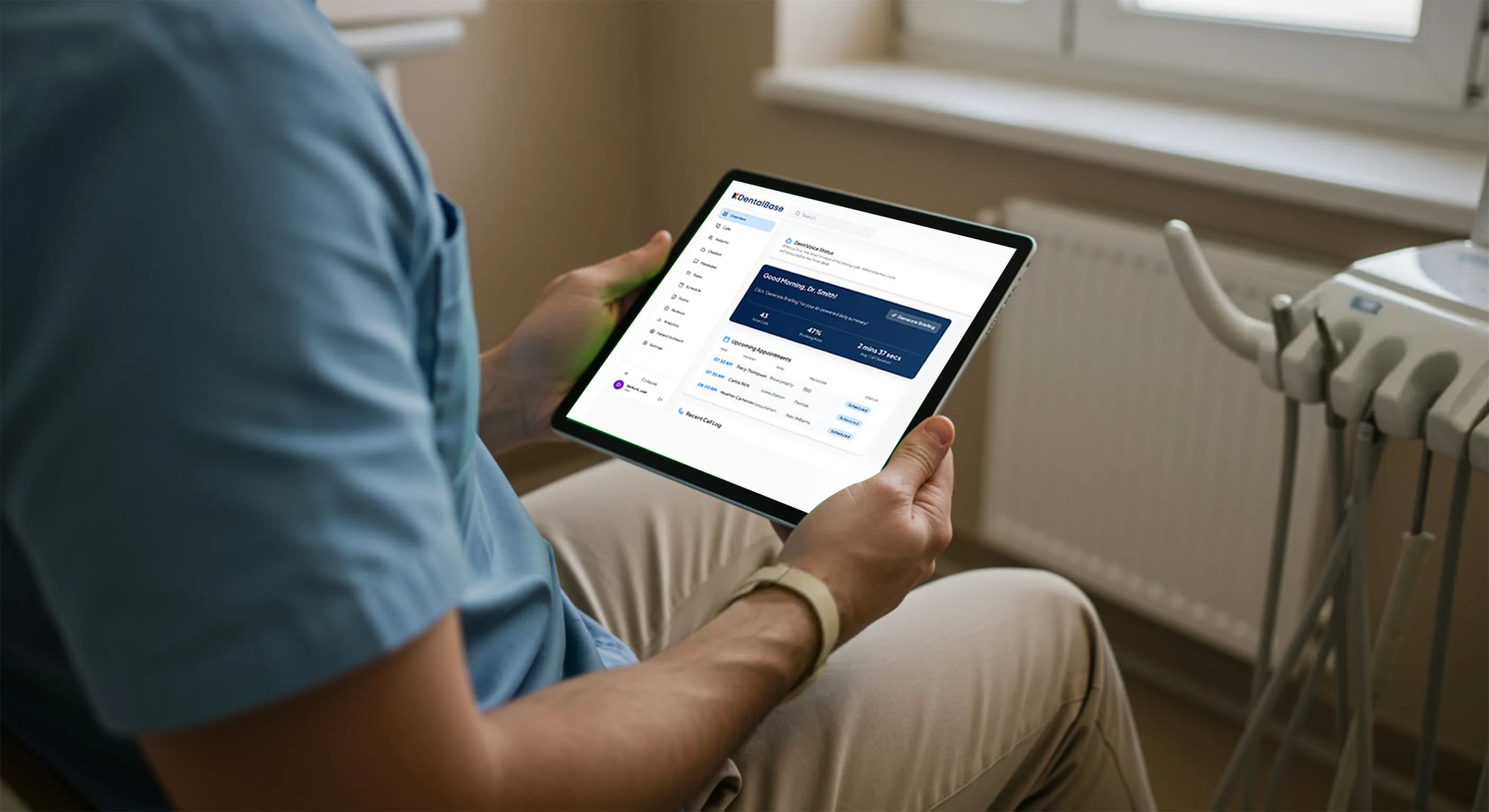
AI Receptionist for DSOs in Georgia: Complete Guide 2026
Comprehensive guide to AI Receptionist for DSOs in Georgia. Learn benefits, implementation, compliance, and how AI supports dental staff across multiple locations.
Share:
Table of contents
Introduction
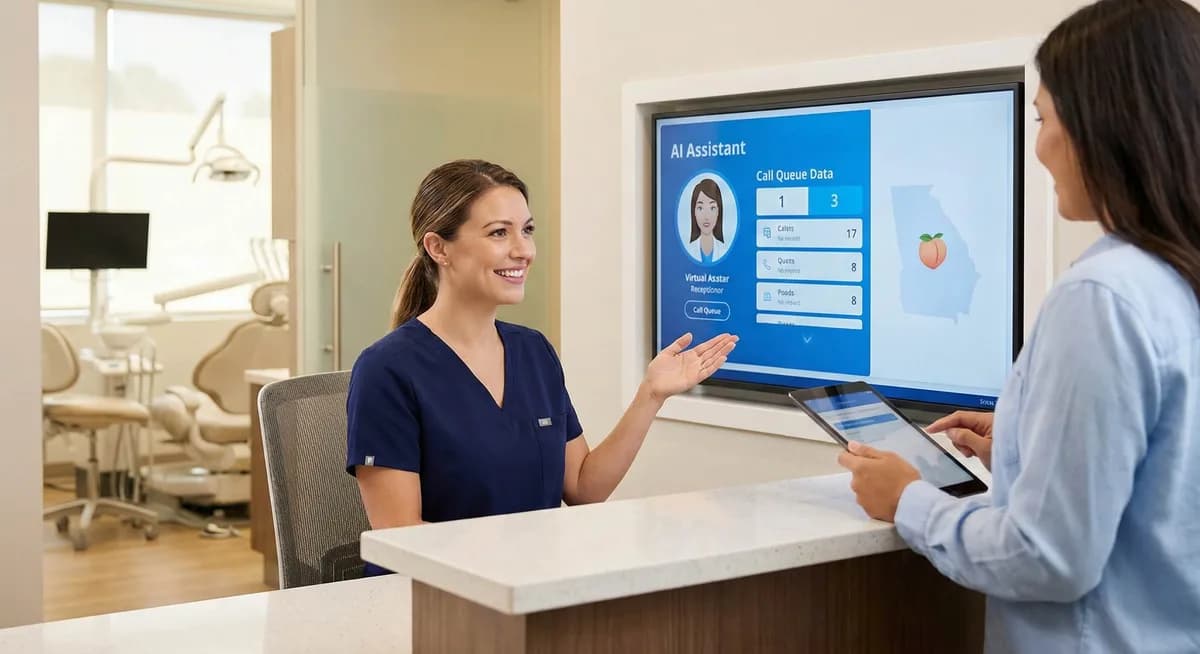
Dental Support Organization leveraging an AI Receptionist for DSOs in Georgia.
As DSOs manage multiple locations with varying patient volumes and staffing challenges. Traditional reception models often struggle to provide consistent service quality. Modern AI reception systems address these operational complexities across all practice locations simultaneously. These systems handle routine inquiries, appointment scheduling, and patient communication.
This comprehensive guide examines how AI receptionists function within DSO environments. It covers practical applications in Georgia's and strategic considerations for successful implementation. We'll explore real-world use cases, compliance requirements, and integration challenges. We'll also examine the collaborative relationship between AI technology and human staff members.
Readers will gain insight into cost-benefit analysis, scaling strategies, and best practices. These are employed by Georgia DSOs when integrating AI reception services into operational framework.
What Is an AI Receptionist for DSOs?
An AI Receptionist for DSOs in Georgia functions as an intelligent communication system. It is designed specifically for multi-location dental operations. Unlike basic automated phone systems, these platforms use natural language processing. They engage in meaningful conversations with patients and understand complex requests. They provide appropriate responses or escalate to human staff when necessary.

Core Functions in a Dental Environment
AI receptionists handle appointment scheduling across multiple practice locations efficiently. They answer frequently asked questions about services and insurance details. They process patient information updates and manage call overflow during peak hours. They access patient management systems to verify appointments accurately quickly. They send confirmation reminders and collect pre-visit information promptly consistently. The technology operates continuously to ensure patients receive immediate responses. Responses are available regardless of practice hours or staff availability.
Advanced systems integrate with existing dental software to maintain appointment calendars. These systems update patient records and trigger workflow processes. They can handle prescription refill requests and post-treatment follow-ups. They also manage emergency triage by assessing symptom severity. Patients are directed to appropriate care levels.
How It Differs From Traditional Automation
Traditional phone trees and basic automated systems rely on predetermined menu options. These systems also offer limited response capabilities. AI receptionists engage in conversational interactions. Responses adapt based on patient needs and maintain context throughout multi-step conversations. They learn from interactions and improve response accuracy over time. They also maintain consistency across all DSO locations.
Key Benefits for Dental Support Organizations
DSOs implementing AI reception solutions experience significant operational improvements. These improvements directly impact patient satisfaction and practice efficiency. Reduced call volume represents one of the most immediate benefits. AI systems handle routine inquiries that typically consume substantial staff time. Front desk personnel can focus on complex patient needs and insurance authorizations. They can prioritize in-person patient care instead of answering repetitive questions. These questions often concern office hours, services, or appointment availability.
Improved patient responsiveness occurs naturally when AI systems provide immediate answers to patient inquiries. Patients no longer experience busy signals during peak calling periods. They also no longer wait on hold for extended periods. This enhanced accessibility directly correlates with improved patient retention rates. It also drives positive online reviews, critical factors for DSO growth and reputation management.
Consistency across locations becomes achievable when AI systems deliver standardized information. They provide consistent service quality regardless of individual practice staffing levels or training variations. Patients receive identical service experiences when calling the main DSO number. They also receive the same experience when calling individual practice locations. This uniformity strengthens brand recognition and patient trust across the entire organization.
Additional benefits include comprehensive call analytics that provide insights into patient communication patterns. They also reveal peak calling times and common inquiry types. This data enables DSOs to optimize staffing schedules and identify training opportunities. It supports informed decisions about service offerings based on actual.
Real-World Use Cases in Georgia DSOs
Georgia DSOs have successfully implemented AI reception solutions across various operational scenarios. These implementations demonstrate practical applications delivering measurable results for DSOs. These real-world examples illustrate how an AI Receptionist supports DSOs in Georgia. It addresses specific challenges common to multi-location within DSOs.
Multi-Location Call Overflow Scenario
A prominent Atlanta-area DSO with twelve practice locations experienced significant call overflow. This occurred during peak hours, particularly Monday mornings and post-holiday periods. Patients frequently encountered busy signals or extended hold times during these periods. This ultimately led to appointment cancellations and negative reviews. The implementation of an AI receptionist system distributed call volume evenly across locations. It automatically routed patients to available appointment slots at nearby practices. This occurred when their preferred location was full.
The system accessed real-time appointment availability across all twelve locations. It offered patients alternative times or locations while maintaining provider preferences when possible. This approach reduced abandoned calls by 65% and increased appointment booking rates. These gains occurred within the first three months of implementation.
Patient Scheduling and Reminders Example
Another Georgia DSO specializing in pediatric dentistry struggled with high no-show rates and last-minute cancellations that disrupted practice schedules and reduced revenue. Their AI receptionist system automated appointment reminders via phone calls and text messages, using natural language to confirm appointments and collect rescheduling requests. The system also handled insurance verification calls and pre-appointment questionnaires, streamlining the check-in process for families.
The pediatric DSO experienced a 40% reduction in no-show rates and improved patient preparation, as families received clear instructions about appointment procedures and required documentation before arriving at the practice.
Integration With Dental Practice Systems
Successful implementation of an AI Receptionist for DSOs in Georgia requires seamless integration with existing practice management systems, patient communication platforms, and clinical workflows. The complexity of DSO operations demands sophisticated integration capabilities that maintain data accuracy across multiple software platforms while preserving operational efficiency.
Scheduling software integration represents the foundation of AI receptionist functionality. The system must access real-time appointment availability across all DSO locations, understand provider schedules and specializations, and maintain accurate booking information. Modern AI platforms integrate with popular dental practice management systems including Dentrix, Eaglesoft, and Open Dental through secure API connections that sync appointment data instantaneously.
CRM and patient records integration ensures AI receptionists access current patient information, treatment histories, and communication preferences. This integration enables personalized interactions while maintaining HIPAA compliance through secure data access protocols. The system can reference previous appointments, outstanding treatment plans, and insurance information to provide relevant responses to patient inquiries.
Workflow alignment requires careful configuration to match existing practice protocols and communication standards. AI systems must understand DSO-specific procedures for emergency triage, insurance verification, and appointment prioritization. Custom programming ensures the AI receptionist follows established practice guidelines while maintaining consistency across all locations.
Integration challenges often include data synchronization delays, software compatibility issues, and staff training requirements. Successful implementations typically involve phased rollouts with extensive testing periods to identify and resolve integration problems before full deployment.
Compliance, Privacy, and Patient Communication
Healthcare compliance requirements create complex considerations for DSOs implementing AI reception solutions. AI Receptionist for DSOs in Georgia must navigate HIPAA regulations, state privacy laws, and professional communication standards while maintaining operational effectiveness and patient trust.
HIPAA considerations require strict data handling protocols when AI systems access patient health information. All patient interactions must occur through encrypted channels with secure data storage and transmission methods. AI platforms must maintain detailed audit logs of patient information access, implement role-based access controls, and ensure data breach notification procedures comply with federal requirements.
Business Associate Agreements (BAAs) between DSOs and AI service providers establish legal frameworks for protected health information handling. These agreements specify data security requirements, breach response procedures, and liability allocation for HIPAA violations.
Consent and disclosures present ongoing challenges as patients must understand when they're interacting with AI systems versus human staff members. Clear disclosure requirements include informing patients about AI involvement in their care coordination, data collection practices, and options for human staff interaction when preferred.
Georgia dental regulations require specific disclosures about automated communication systems, particularly for appointment scheduling and treatment reminders. Patients must provide explicit consent for AI-generated communications and maintain the right to opt out of automated systems.
Safe escalation to staff protocols ensure complex medical inquiries, emergency situations, and patient complaints receive appropriate human attention. AI systems must recognize limitation boundaries and seamlessly transfer patients to qualified staff members when situations exceed their programmed capabilities.
Emergency triage protocols require careful programming to identify urgent dental conditions and direct patients to appropriate care levels without providing medical advice that exceeds system limitations.
Cost, ROI, and Scaling Across Locations
Financial considerations play a crucial role in DSO decision-making processes for AI reception implementation. Cost drivers for AI receptionist systems include initial setup fees, monthly service charges, integration expenses, and ongoing maintenance costs. Enterprise-level pricing typically ranges from $200-800 per location monthly, depending on feature complexity and call volume requirements.
Implementation costs often include software integration, staff training, and system customization to match DSO-specific workflows. These one-time expenses can range from $5,000-15,000 depending on practice management system complexity and customization requirements.
Operational ROI calculations must consider both direct cost savings and indirect benefits. Direct savings include reduced staffing costs for routine call handling, decreased overtime expenses during peak periods, and improved appointment utilization rates through better scheduling efficiency.
A typical Georgia DSO with six locations reported annual savings of $45,000 in staffing costs while improving patient satisfaction scores by 15%. The payback period averaged 8-12 months when including both direct savings and revenue improvements from reduced no-show rates.
Scalability benefits become increasingly apparent as DSOs expand their practice networks. AI systems can accommodate new locations without proportional increases in operational complexity or staffing requirements. This scalability advantage provides significant competitive advantages for growing DSOs.
| DSO Size | Monthly Cost Range | Annual ROI Potential |
|---|---|---|
| 3-5 Locations | $600-$2,000 | $15,000-$35,000 |
| 6-10 Locations | $1,200-$4,000 | $35,000-$75,000 |
| 10+ Locations | $2,000-$8,000 | $75,000-$150,000 |
Why Georgia DSOs Are Evaluating AI Receptionists
Regional growth trends in Georgia's dental market create unique pressures for DSOs seeking operational efficiency and competitive advantages. The state's population growth, particularly in metropolitan Atlanta and surrounding counties, drives increased demand for dental services while simultaneously creating staffing challenges in suburban and rural markets.
Staffing challenges represent perhaps the most significant driver for AI receptionist adoption among Georgia DSOs. The dental industry faces nationwide staffing shortages, with front office positions experiencing particularly high turnover rates. Rural Georgia practices often struggle to maintain consistent reception coverage, making AI solutions attractive for ensuring continuous patient access.
Competition for qualified dental support staff intensifies costs and creates operational instability when positions remain unfilled for extended periods. An AI Receptionist for DSOs in Georgia provides operational continuity regardless of staffing fluctuations.
Patient access expectations continue evolving as consumers become accustomed to immediate responses and 24/7 service availability in other industries. Georgia patients increasingly expect dental practices to accommodate their scheduling preferences and provide prompt responses to inquiries. DSOs implementing AI reception solutions gain competitive advantages by meeting these elevated service expectations while maintaining operational efficiency across multiple locations.
Best Practices for Successful Implementation
Successful AI receptionist implementation requires strategic planning and systematic execution to maximize benefits while minimizing operational disruption. Phased rollout approaches allow DSOs to identify and resolve integration challenges before full deployment across all practice locations.
Initial pilot programs should focus on high-volume practices with stable operations and supportive staff members. These pilot locations provide valuable feedback about system performance, patient acceptance, and workflow modifications needed for broader implementation.
Staff training represents a critical success factor often underestimated during planning phases. Team members must understand AI system capabilities, escalation protocols, and their evolving roles in patient communication workflows. Comprehensive training programs should address both technical system operation and soft skills for collaborating with AI technology.
Ongoing monitoring ensures AI systems maintain performance standards and adapt to changing practice needs. Regular performance reviews should examine call resolution rates, patient satisfaction scores, and system accuracy metrics. Continuous optimization based on performance data helps maximize ROI and patient satisfaction outcomes.
How AI Receptionists Support — Not Replace — Staff
A fundamental principle for successful AI Receptionist for DSOs in Georgia implementation involves positioning technology as a staff support tool rather than a replacement strategy. Role clarity helps team members understand how AI systems enhance their capabilities rather than threatening job security.
AI receptionists handle routine, repetitive tasks that often create staff burnout, freeing human team members to focus on complex patient needs, relationship building, and clinical support activities. This role division improves job satisfaction while enhancing overall practice efficiency.
Staff efficiency improvements occur when team members can dedicate attention to tasks requiring human judgment, empathy, and clinical knowledge. Insurance authorizations, treatment plan discussions, and patient education benefit from human expertise that AI systems cannot replicate.
Patient experience continuity relies on seamless collaboration between AI systems and human staff members. Patients should experience smooth transitions when conversations escalate from AI to human staff, maintaining context and avoiding repetitive information gathering. This collaborative approach ensures patients receive appropriate care levels while maintaining personal connections with their dental care team.
Conclusion
The implementation of an AI Receptionist for DSOs in Georgia represents a strategic opportunity to enhance operational efficiency while improving patient access and satisfaction across multiple practice locations. As demonstrated through real-world case studies and ROI analysis, AI reception solutions address critical challenges facing modern DSOs, from staffing shortages to patient communication expectations.
Successful implementation requires careful attention to compliance requirements, system integration, and staff collaboration protocols. DSOs must approach AI receptionist adoption as a comprehensive operational enhancement rather than a simple technology deployment. The most successful implementations position AI as a collaborative tool that amplifies human capabilities rather than replacing essential staff functions.
Georgia's growing dental market and evolving patient expectations create compelling conditions for AI receptionist adoption. DSOs that proactively implement these solutions gain competitive advantages through improved patient access, operational consistency, and cost management across their practice networks.
When AI receptionists make sense for DSOs: organizations with multiple locations experiencing call overflow, practices struggling with staffing consistency, and DSOs seeking to standardize patient communication across their network. The technology proves most valuable when integrated thoughtfully into existing workflows with proper staff training and patient communication protocols.
Next steps for DSOs considering AI receptionist implementation should begin with thorough needs assessment, vendor evaluation focused on dental-specific functionality, and pilot program development. Partner with experienced implementation teams who understand DSO operational complexity and compliance requirements. Contact DentiVoice to explore how AI reception solutions can enhance your Georgia DSO operations while maintaining the personal touch your patients value.
Frequently Asked Questions
An AI receptionist handles patient calls, schedules appointments, answers common questions about services and insurance, sends appointment reminders, and manages basic patient inquiries 24/7. It can verify insurance benefits, collect patient information, and route complex calls to human staff when needed, ensuring patients receive immediate assistance while reducing administrative burden on dental teams.
Yes, properly configured AI receptionists are HIPAA compliant when they use encrypted communications, secure data storage, and have appropriate business associate agreements in place. They can handle protected health information securely, maintain audit trails of all interactions, and follow strict privacy protocols to ensure patient data remains confidential and meets all regulatory requirements.
Absolutely. AI receptionists are designed to manage multiple locations simultaneously, providing consistent patient experience across all DSO practices. They can handle location-specific scheduling, services, and staff information while maintaining centralized reporting and management. This scalability makes them particularly valuable for dental support organizations operating numerous practices throughout Georgia.
Was this article helpful?
Written by
DentalBase Team
Expert dental industry content from the DentalBase team. We provide insights on practice management, marketing, compliance, and growth strategies for dental professionals.