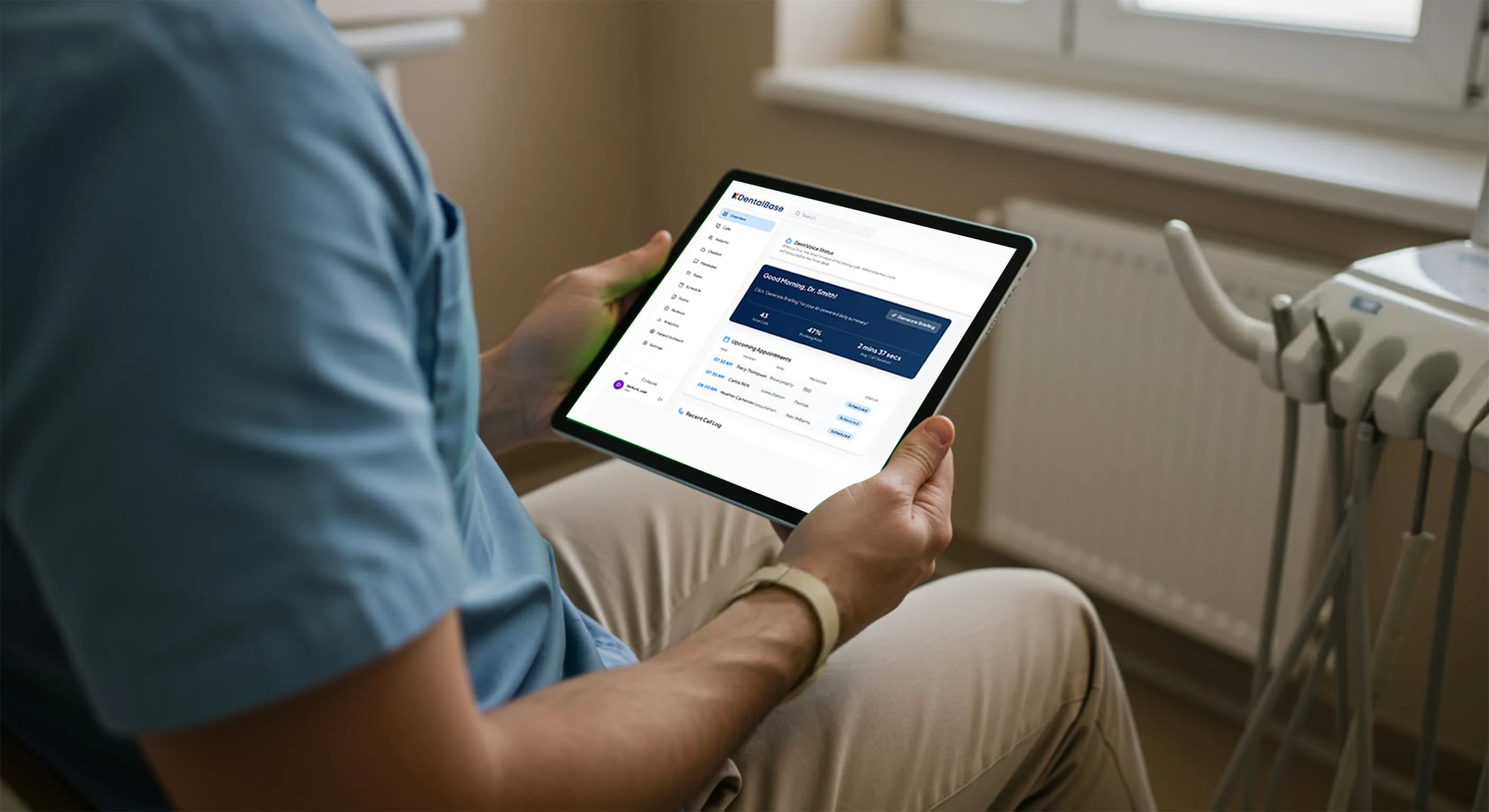
AI Dental Receptionist for Denticon: How Integration Works

Learn how an AI dental receptionist for Denticon integrates with your practice management system. Complete guide to setup, costs, and benefits for dental offices.
Share:
Table of contents
Introduction: AI Receptionists in Modern Dental Practices
An AI dental receptionist for Denticon represents the next evolution in practice management technology. It positions the AI system as a smart enhancement to daily operations. It offers dental offices intelligent automation while preserving the human touch that patients value. Dental practices increasingly rely on Denticon for comprehensive patient management. Therefore, integrating AI-powered reception services has become a strategic consideration. This shift matters especially to forward-thinking practice owners.
Denticon users are exploring AI support tools to enhance operational efficiency. These tools do not replace valuable front desk staff. They help during peak hours, after-hours inquiries, and routine administrative tasks. An AI dental receptionist for Denticon acts as a digital extension of your team. It handles initial patient interactions, appointment scheduling, and basic inquiries. This allows human staff to focus on complex patient needs and in-person care.
The modern dental landscape demands both efficiency and exceptional patient experience. An AI dental receptionist for Denticon works with Denticon to address both requirements. It streamlines routine communications and ensures seamless integration with existing practice management workflows. This approach allows practices to maintain their commitment to personalized patient care. It leverages technology to improve accessibility and responsiveness.
What Is an AI Dental Receptionist for Denticon?
An AI dental receptionist for Denticon is an intelligent software system designed to handle common front desk responsibilities through automated voice and text interactions. Unlike simple chatbots, a modern AI dental receptionist for Denticon utilizes natural language processing and machine learning. These capabilities enable meaningful conversations with patients. They understand context and provide relevant responses.
Core Functions Explained
AI dental receptionists manage appointment scheduling and answer frequently asked questions. They address practice policies and procedures, and collect basic patient information. They also provide office hours and location details. They handle insurance verification inquiries and explain common dental procedures. They also send appointment reminders. The system operates 24/7. It ensures patients can access information and services outside normal business hours.
Advanced AI receptionists integrate with practice management systems. These systems provide real-time scheduling data, patient histories, and treatment information. This connectivity enables accurate appointment availability and rescheduling of existing appointments. It also allows updating patient records with new contact information or insurance details.
What AI Can and Cannot Do
While AI receptionists excel at routine tasks and information dissemination, they have clear limitations. They can efficiently handle standard appointment requests. They also provide general practice information and manage basic patient inquiries. However, they cannot replace human judgment in complex situations. They also cannot handle medical emergencies or provide clinical advice.
AI systems work best with structured scenarios like appointment booking. They also excel at answering common questions about office policies. They struggle with nuanced situations requiring empathy, complex problem-solving, or . Understanding these boundaries helps practices implement AI support effectively. It also ensures appropriate human oversight for sensitive or complex interactions.
How an AI Dental Receptionist Integrates With Denticon
The integration between an AI dental receptionist for Denticon operates through secure API connections. These connections enable real-time data synchronization between the AI system and your practice management software. This technical bridge allows the AI to access scheduling information. It also accesses patient records and appointment availability. All access maintains HIPAA compliance and data security standards.
Integration Models
Most AI dental reception services connect to Denticon through authenticated API calls. These calls retrieve scheduling data and patient information in real-time. The AI system queries Denticon's database to check appointment availability. It also verifies patient information and updates records with new appointments or changes. This bi-directional communication ensures that information remains synchronized across both systems.
The integration typically requires initial setup by your practice management team or IT support. This process involves authentication credentials and permission settings within Denticon. Once established, the AI system can access designated patient data fields and scheduling calendars. It also accesses practice information necessary for effective patient interactions.
Real-World Workflow Example
Consider a typical scenario: A patient calls after hours requesting a cleaning appointment. The AI dental receptionist for Denticon answers the call. It verifies the patient's identity using information from their Denticon record. It checks available appointment slots in real-time and books an appropriate time slot. The system then updates the Denticon schedule immediately. It sends confirmation messages to both the patient and the practice.
This workflow demonstrates how seamless integration works. It eliminates duplicate data entry, reduces scheduling errors, and provides immediate patient service. The AI accesses the same scheduling information your human staff would use. This ensures consistency across all . When staff arrive the next morning, they see the new appointment in Denticon. It appears as if a human receptionist had scheduled it.
Key Benefits for Denticon-Based Practices
Implementing an AI dental receptionist for Denticon delivers measurable benefits. These benefits span operational efficiency and patient satisfaction metrics. Practices report significant improvements in call response rates, reduced administrative workload, and enhanced patient access. With an AI dental receptionist for Denticon, scheduling services become more accessible.
Operational Efficiency
The primary operational benefit lies in call management during peak hours and after-hours availability. AI receptionists handle routine inquiries without interrupting clinical workflows, allowing human staff to focus on in-person patient care and complex administrative tasks. This division of labor reduces staff stress during busy periods and improves overall practice productivity.
Data synchronization between the AI system and Denticon eliminates duplicate data entry and reduces scheduling errors. When the AI books appointments or updates patient information, changes appear immediately in Denticon, maintaining data accuracy across all practice systems. This integration streamlines morning huddles and schedule reviews since all information remains current and accessible.
Patient Experience Improvements
Patients benefit from immediate response to inquiries regardless of time of day or office volume, a key component of a positive patient experience. The AI system provides consistent, accurate information about appointments, policies, and procedures without wait times or busy signals. This accessibility particularly benefits working patients who may only have time to call outside normal business hours.
The AI dental receptionist for Denticon also reduces patient frustration with repetitive tasks like appointment confirmations and rescheduling. The system can handle multiple patients simultaneously, ensuring no calls go unanswered during peak periods. Patients appreciate the efficiency while still receiving the option to speak with human staff when needed for complex issues or personal preferences.
| Benefit Category | Traditional Reception | AI-Enhanced Reception |
|---|---|---|
| After-Hours Availability | Voicemail Only | Full Service 24/7 |
| Peak Hour Coverage | Limited by Staff | Unlimited Capacity |
| Data Entry Accuracy | Human Error Risk | Automated Sync |
Cost, Pricing Models, and ROI Considerations
Understanding the financial implications of an AI dental receptionist for Denticon requires examining both direct costs and potential return on investment. Pricing models vary among providers, but most follow subscription-based structures with features scaled to practice size and requirements.
Typical Pricing Structures
How much does a dental AI receptionist cost? Most AI dental reception services charge monthly subscription fees ranging from $200 to $800 per month, depending on call volume, feature complexity, and integration requirements. Basic packages typically include standard appointment scheduling and FAQ responses, while premium tiers offer advanced features like insurance verification and complex workflow automation.
Some providers charge per-call or per-appointment fees, which can be cost-effective for smaller practices with lower call volumes. Enterprise-level practices may negotiate custom pricing based on multiple locations or high-volume usage. Implementation costs, including Denticon integration setup, typically range from $500 to $2,000 as a one-time fee.
Additional costs may include training sessions for staff, customization of AI responses to match practice policies, and ongoing technical support. Practices should budget for these auxiliary expenses when evaluating total cost of ownership.
Evaluating Return on Investment
ROI calculation for AI reception services focuses on staff time savings, increased appointment bookings, and reduced missed calls. Practices typically see returns through improved staff productivity, as human receptionists can focus on higher-value tasks while the AI handles routine inquiries. This efficiency often translates to better patient service and increased appointment capacity without additional staffing costs.
The 24/7 availability of an AI dental receptionist for Denticon can capture appointments that would otherwise be lost to after-hours calls going to voicemail. Even modest increases in appointment bookings often justify the monthly subscription costs. Practices should track metrics like call answer rates, appointment booking conversion, and staff time allocation to measure actual ROI after implementation.
Compliance, Security, and Legitimacy Concerns
Dental practices considering an AI dental receptionist for Denticon must address legitimate concerns about patient data security, regulatory compliance, and service reliability. These considerations are essential for maintaining patient trust and meeting healthcare industry standards.
HIPAA and Patient Data Protection
HIPAA compliance represents the primary security concern when implementing AI reception services. Reputable AI providers offer Business Associate Agreements (BAAs) and maintain SOC 2 Type II certification to demonstrate appropriate security controls. The integration with Denticon must include encrypted data transmission, secure authentication protocols, and audit trails for all patient information access.
AI systems should implement role-based access controls, ensuring the artificial intelligence only accesses patient information necessary for its designated functions. Patient consent procedures may require updates to inform individuals about AI interaction with their health information. Regular security assessments and compliance reviews help maintain ongoing HIPAA adherence.
Data retention policies must align with both HIPAA requirements and your practice's information governance procedures. The AI provider should offer clear data deletion procedures and geographic data storage compliance if your practice operates under specific state regulations, as outlined in HIPAA compliance.
Is an AI Receptionist Legit?
Is AI receptionist legit? This common question reflects valid concerns about service reliability and business legitimacy. Established AI reception providers demonstrate legitimacy through transparent business practices, published customer testimonials, and measurable service level agreements. Look for providers with healthcare industry experience, regulatory compliance certifications, and clear escalation procedures for technical issues.
Legitimate AI reception services provide detailed reporting on call handling, appointment booking success rates, and system uptime. They offer human support teams for troubleshooting and maintain regular software updates to improve performance. Practices should verify provider credentials, review customer references, and test service quality during trial periods before committing to long-term contracts.
How to Set Up an AI Dental Receptionist With Denticon
Successfully implementing an AI dental receptionist for Denticon requires careful planning and systematic execution to ensure smooth integration with your existing practice workflows. The setup process typically spans 2-4 weeks from initial consultation to full operation.
Pre-Implementation Checklist
How to set up an AI receptionist? Begin by documenting your current reception workflows, common patient inquiries, and scheduling procedures. This information helps customize the AI system to match your practice's specific needs and communication style. Identify which staff members will oversee AI system management and require training on monitoring and adjustment procedures.
Verify Denticon system permissions and user credentials needed for API integration. Your practice management system administrator should review current backup procedures and data security protocols before granting AI system access. Prepare a communication plan to inform patients about the new AI reception service, including how they can request human assistance when needed.
Establish success metrics for measuring AI performance, such as call answer rates, appointment booking accuracy, and patient satisfaction scores. These baseline measurements will help evaluate system effectiveness after implementation.
Step-by-Step Setup Process
The implementation process for your AI dental receptionist for Denticon begins with technical integration between the AI platform and Denticon. Your chosen AI provider will guide your IT team or practice administrator through authentication setup, permission configuration, and data field mapping. This technical foundation typically requires 3-5 business days to complete and test.
Next, customize AI responses to reflect your practice's policies, procedures, and communication tone. This includes programming appointment types, availability windows, and escalation triggers for complex inquiries. Staff training sessions familiarize your team with monitoring tools, override procedures, and patient feedback collection.
The final phase involves gradual deployment, often starting with after-hours coverage before expanding to peak-hour support. This phased approach allows your team to monitor performance, adjust responses, and resolve any integration issues before full implementation. Regular review sessions during the first month help optimize system performance and address staff feedback.
Ongoing maintenance includes monitoring call logs, updating AI responses based on common patient questions, and reviewing integration performance with Denticon. Most providers offer technical support and system optimization as part of their service packages.
Conclusion: Using AI to Support, Not Replace, Your Front Desk
The successful integration of an AI dental receptionist for Denticon demonstrates how technology can enhance rather than replace human expertise in dental practice management. This collaborative approach leverages AI efficiency for routine tasks while preserving the personal touch and clinical judgment that define exceptional patient care.
Key takeaways from implementing AI reception services include the importance of proper integration planning, staff training, and ongoing performance monitoring. Practices benefit most when they view AI as a complement to existing staff capabilities rather than a replacement for human interaction. The technology excels at handling routine inquiries, managing after-hours communications, and maintaining consistent service availability, while human staff continue to provide the empathy, clinical knowledge, and problem-solving skills that patients value.
The investment in AI reception technology pays dividends through improved operational efficiency, enhanced patient accessibility, and reduced administrative workload for your human team. However, success depends on choosing a reputable provider, ensuring proper HIPAA compliance, and maintaining clear boundaries between automated and human-assisted services.
For Denticon-based practices considering this technology, the next steps involve evaluating current reception workflows, researching qualified AI providers with healthcare experience, and developing implementation timelines that allow for proper staff training and patient communication. The goal remains unchanged: providing exceptional patient service through the most effective combination of human expertise and technological efficiency.
Ready to explore how an AI dental receptionist for Denticon can support your Denticon-based practice? Contact qualified providers for demonstrations and discuss your specific integration requirements to determine the best solution for your practice's unique needs.
Frequently Asked Questions
AI dental receptionists typically cost between $200-800 per month depending on features and call volume. Most providers offer tiered pricing based on the number of calls handled, with basic plans starting around $200-300 monthly. Enterprise solutions with advanced integrations like Denticon can range $500-800+. The investment often pays for itself through reduced staffing costs, fewer missed calls, and improved appointment booking efficiency.
Yes, AI receptionists are legitimate business tools used by thousands of healthcare practices. They're HIPAA-compliant, use advanced natural language processing, and integrate with established practice management systems like Denticon. Reputable providers offer transparent pricing, security certifications, and proven track records. However, choose established vendors with healthcare experience and proper compliance measures rather than generic chatbot services.
AI receptionists can handle appointment scheduling, cancellations, and rescheduling through Denticon integration. They answer common patient questions, collect insurance information, send appointment reminders, and provide practice information 24/7. Advanced systems can handle multi-turn conversations, transfer complex calls to human staff, and update patient records automatically. They cannot perform clinical consultations or handle emergency situations requiring immediate human intervention.
Setting up an AI receptionist involves choosing a provider, configuring Denticon API integration, training the system with your practice's information, and testing call flows. The process typically takes 1-2 weeks including provider onboarding, system customization, staff training, and gradual rollout. Most providers offer setup assistance, training materials, and ongoing support to ensure smooth implementation and optimal performance.
No, an AI dental receptionist is not equipped to handle medical or dental emergencies. Its role is to manage routine tasks like scheduling. Reputable AI systems are programmed to recognize keywords related to emergencies (e.g., 'pain,' 'swelling,' 'bleeding') and immediately escalate the call to a human staff member or provide instructions to call 911 or an emergency line.
Was this article helpful?
Written by
DentalBase Team
Expert dental industry content from the DentalBase team. We provide insights on practice management, marketing, compliance, and growth strategies for dental professionals.