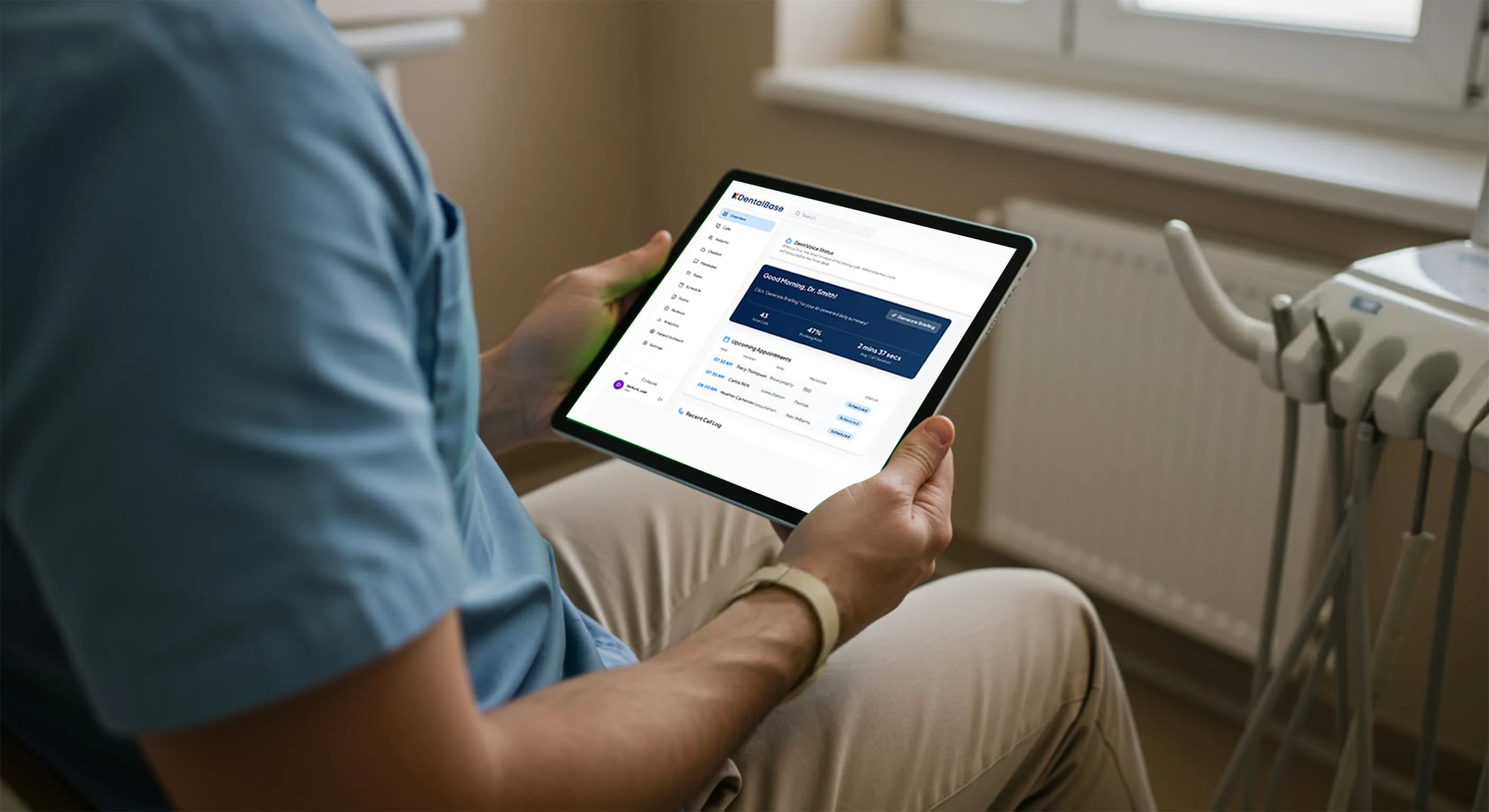
AI Dental Receptionist vs Traditional Answering Services: 2026 Guide
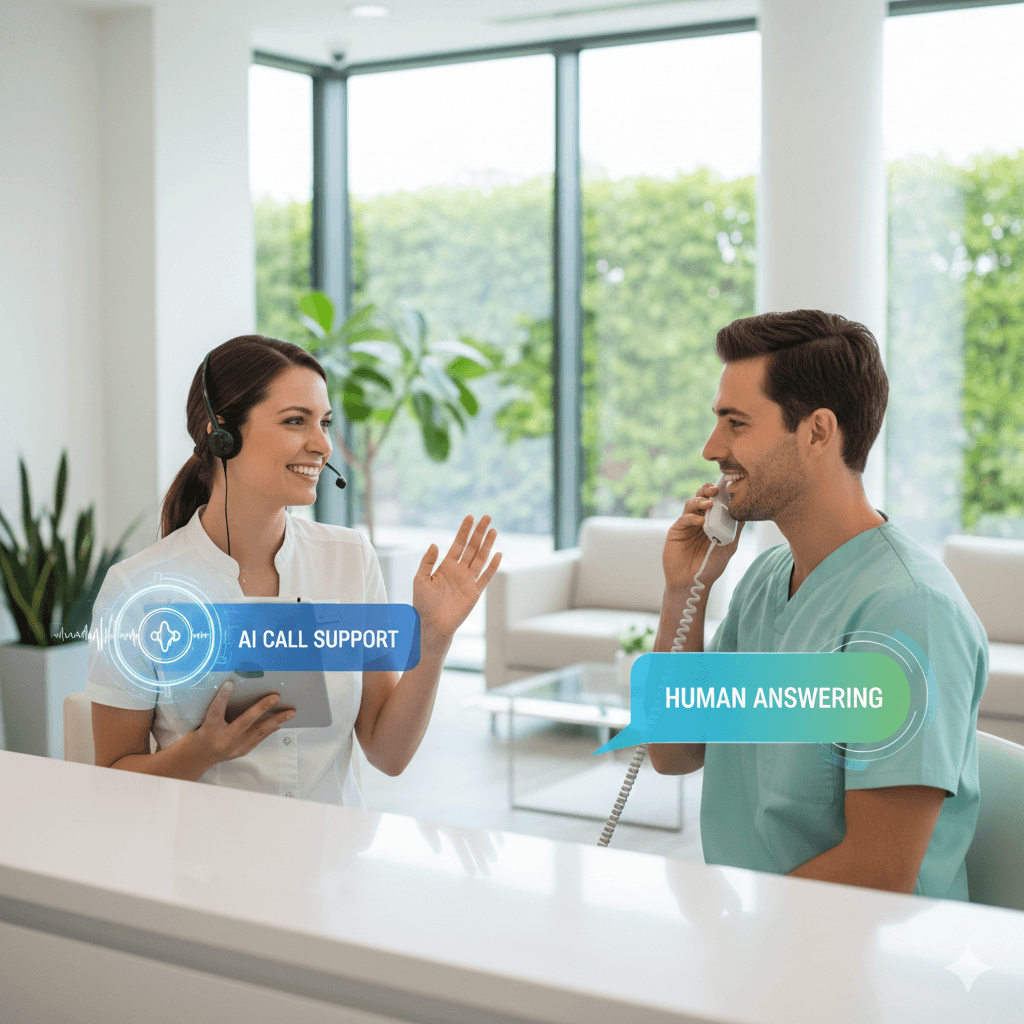
Compare AI dental receptionist vs traditional answering services. Learn costs, features, HIPAA compliance & which solution fits your dental practice best.
Share:
Table of contents
Introduction
Dental practices face unprecedented challenges in managing patient communications. Average dental offices receive 50-100 calls daily. Patient expectations for immediate responses are at an all-time high. Choosing the right call support solution has become critical for practice success, especially when evaluating AI dental receptionist vs traditional models. These communication demands exist alongside broader oral health responsibilities outlined in authoritative guidance from the American Dental Association.
Choosing the Right Call Support for Dental Practices
The modern dental landscape presents two primary options for handling calls. These calls often occur beyond regular hours or during peak times. The options are AI-powered virtual receptionists and traditional human answering services. Each approach offers distinct advantages. Understanding their differences is essential for making an informed decision, and many owners begin by researching AI dental receptionist vs human-based services.
This comparison of an AI dental receptionist vs traditional answering services explores several key factors. These include cost-effectiveness, feature sets, and compliance requirements. It also examines the impact on patient experience. Solo practitioners can use this guide to extend availability. Multi-location practices can use it to evaluate scalable solutions.
What Is an AI Dental Receptionist?
An AI-powered dental receptionist is a virtual assistant designed for dental practice communications. It uses natural language processing and machine learning technologies. Unlike generic chatbots, these systems are trained on dental-specific terminology. They also understand procedures and common patient inquiries, which is often highlighted in discussions around AI dental receptionist vs traditional answering workflows.
Core Capabilities in a Dental Setting
Modern AI dental systems excel at appointment scheduling and frequently asked questions. They handle inquiries about procedures and office policies. They also process insurance verification requests and basic patient intake information. These systems integrate with practice management software, a major differentiator when comparing AI dental receptionist vs manual call handling.
The technology operates 24/7 without breaks, sick days, or vacation time. This ensures consistent patient support at all hours. Advanced systems handle multiple calls simultaneously. This eliminates busy signals and reduces patient frustration during peak periods, a common pain point in AI dental receptionist vs call-center-based solutions.
How AI Supports (Not Replaces) Front Desk Teams
AI dental receptionists function as support tools rather than staff replacements. They manage routine inquiries and after-hours calls. This allows human team members to focus on complex patient needs. Staff can prioritize in-person interactions and clinical support during business hours, which is why many practices view AI dental receptionist vs staff augmentation rather than substitution.
This collaborative approach reduces staff burnout from repetitive tasks. It also ensures patients receive immediate answers to basic questions. When calls require human intervention, AI systems respond appropriately. They transfer calls for medical emergencies or complex discussions. Escalation follows established on-call protocols.
What Are Traditional Dental Answering Services?
Traditional dental answering services use trained human operators to handle calls. These operators act on behalf of dental practices. Such services have been an industry standard for decades. They are commonly used for after-hours and overflow call management, making them a frequent comparison point in AI dental receptionist vs evaluations.
How Traditional Answering Services Operate
Human answering services typically operate from call centers. Operators receive training in basic dental terminology and practice protocols. Calls are forwarded when offices are closed or lines are busy. Live operators answer using your practice's name. They follow predetermined scripts.
Operators can take messages and schedule appointments. They often use web-based calendar access. They provide basic information about office hours and locations. Emergencies are escalated according to your protocols. Most services offer 24/7 coverage. Multiple operators manage calls during peak periods.
The traditional model relies on detailed call scripts and training materials. Each dental practice provides these materials. Operators follow them to maintain consistency with your style and policies. Their ability to handle complex inquiries is limited. Responses depend on training and provided instructions, a limitation often cited in AI dental receptionist vs traditional comparisons.
AI Dental Receptionist vs Traditional Answering Services: Key Differences
Understanding the differences between automated and human-operated solutions is crucial. This knowledge helps you choose the right option. The decision directly affects your dental practice operations, particularly when weighing ai dental receptionist vs long-standing service providers.
Availability, Speed, and Consistency
AI systems provide instant response times with no waiting. Traditional services may place callers on brief holds during busy periods. AI maintains consistent quality and protocol adherence. Performance does not vary due to fatigue, mood, or training gaps. Human operators excel at unexpected situations. They also provide empathetic responses to distressed patients.
Traditional services offer the value of human judgment and emotional intelligence. This value cannot be replaced by automation. Human operators adapt to urgent concerns and complex questions. They provide reassurance that AI cannot fully match, which remains a key consideration in AI dental receptionist vs human-led support.
Cost Structure and Scalability
Cost differences between options are substantial. AI solutions typically cost $50-200 per month. They offer unlimited call handling capacity. Human answering services usually cost $200-800 monthly. Pricing depends on call volume and service levels. Traditional services often charge per call or per minute. Costs increase as your practice grows, which is why many owners explore how dental practices scale without overloading the front desk as call demand rises.
Scalability strongly favors AI systems. They handle unlimited simultaneous calls. No additional fees apply as volume increases. This makes them ideal for growing practices. They also work well during seasonal call spikes, reinforcing the long-term value proposition of ai dental receptionist vs per-call pricing models.
Compliance, Security, and Patient Experience Considerations
Healthcare communication requires strict privacy and security standards. Compliance evaluation is essential when comparing call handling solutions. This step protects both patients and practices, regardless of whether you choose ai dental receptionist vs traditional services.
HIPAA and Data Security Basics
Is an AI dental receptionist HIPAA compliant? Yes, reputable AI dental systems are designed with HIPAA compliance in mind. Compliance is a core requirement. These systems use end-to-end encryption and secure data transmission. They also apply access controls and maintain audit trails. Practices must verify provider compliance. Providers should offer signed Business Associate Agreements and regular security audits.
Traditional answering services must also meet HIPAA requirements. Operators receive training on privacy protocols and secure message handling. Both options can meet regulations when implemented properly. AI systems often provide more detailed audit trails. They also ensure consistent adherence to protocols, which is frequently noted in ai dental receptionist vs compliance discussions.
Can AI answer dental office phones after hours? Absolutely. AI systems excel at after-hours coverage. They provide immediate responses to patient inquiries. They handle appointment requests and escalate emergencies. All actions follow predetermined protocols. This capability is especially useful for practices focused on handling dental schedule gaps caused by patient cancellations without relying on next-day callbacks.
Impact on Patient Trust and Satisfaction
Patient experience varies significantly between solutions. AI systems provide consistent, professional interactions. They avoid variability caused by human mood or experience. AI never forgets protocols or provides conflicting information. This consistency builds trust through reliability, a common advantage highlighted in ai dental receptionist vs patient satisfaction studies.
Some patients still prefer human interaction. This preference is stronger for sensitive health concerns. Complex treatment discussions also benefit from human empathy. Traditional services provide a nuanced understanding during stressful situations.
Modern patients expect immediate responses to inquiries. AI systems meet this expectation with instant availability. Traditional services may require callbacks. After-hours availability can vary by service agreement.
How to Decide Which Option Is Right for Your Dental Practice
Selecting between AI and traditional answering solutions requires careful evaluation. Practices must assess specific needs and resources. Patient demographics also play an important role, particularly when deciding on ai dental receptionist vs human-based coverage.
Practice Size, Call Volume, and Staffing
Solo and small group practices often benefit from AI solutions. Cost efficiency is a major advantage. Unlimited capacity also adds value. Practices receiving fewer than 100 calls daily see strong returns. AI works well for basic scheduling and information sharing.
Larger practices may have more complex scheduling needs. Multi-location offices often manage higher call complexity. High-anxiety patient populations may prefer human interaction. Traditional services offer empathy and judgment. These qualities help in complex situations.
Decision Checklist
| Aspect | AI Dental Receptionists | Traditional Answering Services |
|---|---|---|
| ✔️ Availability | 24/7 availability with instant responses | Limited by staffing and shifts |
| ✔️ Response Consistency | Highly consistent, standardized answers | Can vary by agent and situation |
| ✔️ Cost | Lower long-term operational costs | Higher ongoing costs, especially for premium services |
| ✔️ Best For Scheduling & Inquiries | Routine scheduling and basic patient questions | Complex or nuanced patient conversations |
| ✔️ Empathy & Emotional Support | Limited or none | Strong human empathy and reassurance |
| ✔️ Patient Preference | Ideal for patients comfortable with digital interactions | Preferred by older patients or those wanting human contact |
| ✔️ Emergency Handling | Follows predefined rules and scripts | Uses human judgment for emergencies |
| ✔️ Treatment Discussions | Not suitable for complex treatment explanations | Well-suited for detailed treatment discussions |
| ✔️ Software Integration | Can integrate with practice management systems | Limited or indirect integration |
| ✔️ Scalability | Easily scalable without added staff | Scaling requires hiring and training more agents |
Summary:
AI dental receptionists excel in consistency, scalability, and cost efficiency, offering instant responses but lacking human empathy. Traditional answering services provide emotional intelligence and judgment at a higher cost, with potential variability in quality. This captures the core trade-offs between AI dental receptionists and traditional answering services.
Conclusion: Modern Call Handling Without Replacing Your Team
The choice between an AI dental receptionist vs traditional answering services depends on your circumstances. Patient needs and operational goals also matter. Both solutions provide value when implemented correctly.
AI dental receptionists deliver consistent and cost-effective support. They enhance your team's capabilities without replacing staff. Routine tasks are handled efficiently. This frees your team for high-value patient interactions. Clinical support also receives more focus. Traditional answering services remain valuable. They suit practices prioritizing human connection and empathy.
Many practices succeed with hybrid approaches. AI manages routine inquiries and after-hours calls. Traditional services handle complex or sensitive situations. This strategy balances efficiency with human touch, offering a practical middle ground in the ongoing ai dental receptionist vs debate.
Evaluate providers carefully before deciding. Request demonstrations and verify HIPAA documentation. Consider trial periods to gauge patient response. Assess system integration with existing workflows. The right solution improves efficiency. It also preserves the quality of care that drives long-term success.
Ready to Evaluate AI Reception for Your Practice
If your team is spending too much time reacting to cancellations instead of staying ahead of them, exploring DentiVoice can be a practical next step.
Request a Dentivoice demo to see how it would work in your practice.
Frequently Asked Questions
Not always. They work best for practices with high call volume, routine scheduling needs, and patients comfortable with digital tools. Practices that frequently handle complex treatment discussions or emergencies may prefer human answering services.
AI systems can follow predefined emergency protocols, such as routing urgent calls or providing instructions. However, they cannot make nuanced judgment calls like a trained human agent.
It depends on the patient demographic. Younger or tech-savvy patients often appreciate fast, automated responses, while older patients or those seeking reassurance may prefer speaking with a real person.
Was this article helpful?
Written by
DentiVoice Team
The DentiVoice Team is a collective of dental marketing experts, AI developers, and practice management consultants dedicated to helping dental practices thrive in the digital age.